Last Mile Insights
· · · Route Operations · · ·
Saturday, June 27, 2026
Rescue Management
Feature Report · Vol VII
Turn last-minute panic into a planned system

Managing Rescues and
Backup Drivers Efficiently

How the best DSPs turn a last-minute panic into a planned system that protects their DCR, keeps overtime under control, and gives every driver on the road someone to call.

The Problem
E

very DSP deals with rescues. A route running behind, a driver who needs help, a van that breaks down at 3pm — it's part of last-mile operations. The difference between a smooth operation and a stressful one isn't whether rescues happen. It's whether they're planned for or improvised. The improvised version costs overtime, scorecard points, and the quiet exhaustion of a team that absorbs the pressure every time.

The Cost
T

he 4:30pm scramble is expensive in ways that don't show up on a single line item. The overtime is visible. The scorecard hit from a late delivery window is visible. What isn't visible is the toll on the driver who gets pulled from their own route to rescue someone else's — and who starts quietly calculating whether this operation is worth the unpredictability. High rescue rates and unplanned backups are one of the most consistent drivers of experienced driver attrition.

The System
A

real backup bench, live route visibility, and a clear protocol turns the same situation into a routine adjustment nobody loses sleep over. The operations that handle rescues well don't have fewer emergencies than anyone else — they just have a system that treats emergencies as anticipated events rather than surprises. That single shift in posture changes everything about how the team responds when the call comes in.

Sound familiar?

It's 4:30pm. A route is clearly not finishing. Someone scrambles to pull a driver off another job, overtime kicks in, the scorecard takes a hit — and tomorrow it happens again. The problem isn't the rescue. It's that nobody planned for it.

0%
Of DSPs have no backup plan

Over a third of DSP operations have no documented backup driver protocol — rescues are handled entirely by improvisation.

0hrs
Average overtime per rescue

Each unplanned rescue generates an average of two hours of overtime — for the backup driver and often for the original driver too.

0%
DCR impact from late rescues

Rescues triggered after 4pm are significantly more likely to result in missed delivery windows and a DCR drop the following week.

0x
Faster with a protocol

Operations with a documented rescue protocol deploy backup drivers three times faster than those handling it case by case.

In this feature: Backup bench Route visibility Rescue protocol Overtime control DCR protection

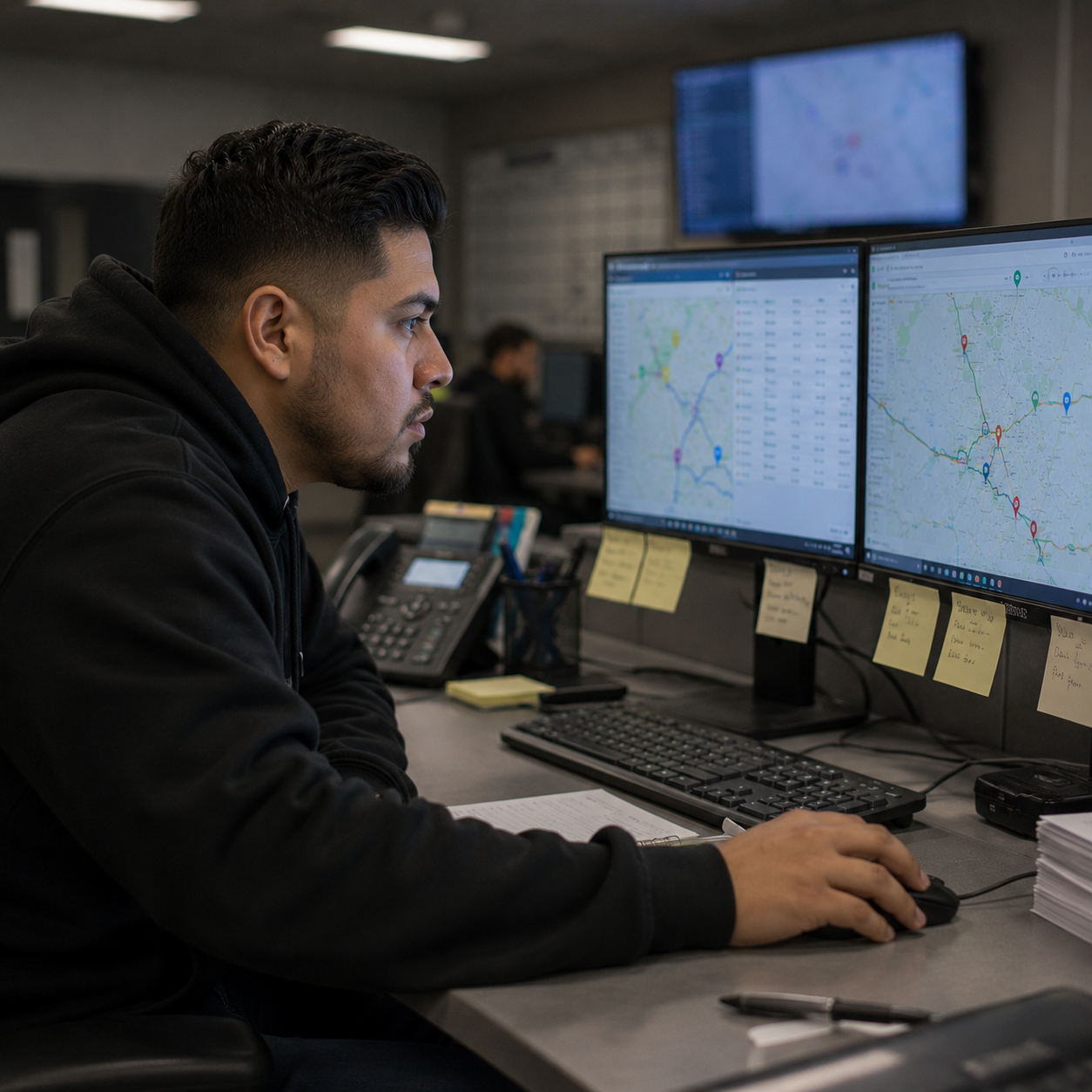
A dispatcher tracking live route progress mid-afternoon — this is where rescues are won or lost. Catching a route falling behind at 2 p.m. is a routine fix; catching it at 5 p.m. is an emergency.

The Four Parts of a Rescue-Ready Operation

Managing rescues well comes down to four things working together. Get all four right and rescues stop being emergencies — they become a normal, manageable part of the day that no longer costs you overtime, scorecard points, or your best drivers’ patience.

01
Visibility Before It’s Too Late

Spot a route falling behind early enough to actually do something about it.

02
Building a Real Backup Bench

Who to call, when to call them, and how to keep flex drivers without blowing the payroll.

03
A Clear Rescue Protocol

A decision flow that turns a last-minute scramble into a calm, practiced response.

04
Tracking Rescue Frequency

Why certain routes keep needing help — and what the data tells you that your gut never will.

Most DSPs already do some version of all four — the problem is they do them reactively, under pressure, when it's already too late to change the outcome. The shift from reactive to planned isn't complicated, but it does require building each piece deliberately before the day goes sideways. Start with the most important one: seeing the problem coming.

01 · Visibility
Visibility Before It's Too Late

Most rescue problems don't start at 5 p.m. — they start at 2 p.m. when nobody was watching. By the time panic sets in at the end of the shift, the window to respond cleanly has already closed. Catching a route falling behind early is the single most important thing a dispatcher can do to keep the day from unraveling — and it costs nothing except the habit of actually looking. The difference between a smooth rescue and a last-minute crisis is almost always about when the problem was spotted, not how bad it was. A route that's 30 minutes behind at 2 p.m. is a manageable adjustment. That same route at 5 p.m. is an overtime bill, a scorecard hit, and a frustrated driver absorbing a problem that didn't have to happen. Most dispatchers already know when something is going wrong — the habit of acting on it early is what makes the difference.

Click to read more
01 · Visibility
Spot it at 2 p.m., not 5 p.m.

Route visibility during the day is what separates a rescue from a crisis. A dispatcher checking progress at midday — not just at end-of-shift — catches a struggling route while there's still time to act. Flag anything tracking more than 20% behind and dispatch help early. Build a midday check into your routine, set a simple threshold for when a route gets flagged, and make sure whoever is watching has the authority to call a rescue without waiting for approval. Do that consistently and most rescues become calm, planned handoffs instead of last-minute scrambles.

Click to flip back
02 · Backup Bench
Building a Real Backup Bench

A backup bench isn't about carrying idle drivers on the payroll — it's about knowing exactly who to call before you need them. The operations that handle rescues smoothly aren't the ones reacting fastest; they're the ones who built the list on a quiet Tuesday, not in the middle of a 4 p.m. crisis. Without a bench, every rescue starts with a frantic search for whoever happens to be available — and whoever happens to be available is rarely the right person at the right time. A pre-built bench removes that search entirely and turns a stressful decision into a routine call. It also protects your best full-time drivers from constantly absorbing the cost of a system that isn't ready — because when there's no bench, it's always the reliable people who get pulled, stretched thin, and eventually burnt out covering for a problem that didn't have to fall on them.

Click to read more
02 · Backup Bench
Who to call — before you need them

Know which drivers regularly finish light routes early and which are available for standby on heavy days. A two-driver flex bench covers almost any rescue without blowing overtime — but only if the list exists before the emergency. Review it weekly, keep it current, and make sure dispatch knows exactly who's on it and in what order to call. The bench doesn't need to be large — it needs to be reliable and ready. Two drivers who know they're on the bench, know the protocol, and can move quickly is worth far more than ten names on a list nobody has looked at in a month. When the moment comes, the decision is already made — and that's the whole point.

Click to flip back
03 · Protocol
A Clear Rescue Protocol

When a rescue is needed, three questions need instant answers: who decides it's happening, who gets called, and how do the packages get redistributed. If your team has to figure that out under pressure, you've already lost the time that mattered most. A protocol isn't a complicated document — it's a simple, agreed-upon decision flow that exists before the emergency so nobody has to think from scratch in the middle of one. The teams that respond to rescues calmly aren't calmer people; they're people who already know exactly what to do. Without a protocol, every rescue is also a test of who can think fastest under stress — and that's an expensive, exhausting, and entirely avoidable way to run an operation.

Click to read more
03 · Protocol
Calm, practiced, not improvised

A rescue protocol answers those three questions before the day starts — so when a route falls behind, the response is immediate and practiced rather than panicked. Write it down, walk your team through it, and revisit it after every rescue. The goal isn't perfection; it's removing the ten minutes of confusion that turns a manageable situation into an expensive one. A good protocol also protects the driver being rescued — they know help is coming, they know who to hand packages to, and they don't have to stand on the side of the road wondering what happens next. That clarity matters more than most owners realize, because a driver who trusts the system handles a difficult day very differently from one who feels abandoned in it.

Click to flip back
04 · Frequency
Tracking Rescue Frequency

A route rescued once is an anomaly. A route rescued every week is a system problem hiding in plain sight — and the only way to see it clearly is to track the data instead of relying on memory or gut feel. Most DSP owners know which routes are "the hard ones," but knowing it in your gut and seeing it in the numbers are two very different things. The gut feeling stays vague and gets absorbed as a cost of doing business. The number demands a response. When you can point to a specific route that has been rescued six out of the last eight weeks, the conversation about fixing it becomes impossible to avoid — and the solution, whether it's recalibrating the stop count, adjusting the sequence, or splitting the route, finally gets the attention it deserves.

Click to read more
04 · Frequency
The route is the problem, not the driver

Track which routes get rescued and how often. If the same route appears week after week, the volume is miscalibrated, the sequence is off, or the stop count is unrealistic for the time window. The data makes that pattern impossible to ignore — and once you see it, fixing the route is far cheaper than continuing to rescue it indefinitely. A driver who keeps needing help on the same route isn't struggling — the route itself is broken. Tracking frequency is what finally makes that visible and puts the fix in the right place.

Click to flip back

These four parts work as a system — and that's what makes them powerful when they're all in place. Visibility feeds the backup bench: you can't call in a rescue driver if you don't know a route is struggling until it's too late. The backup bench enables the protocol: a clear decision flow only works if you actually have someone to send. And the protocol only improves when you're tracking frequency: every rescue is a data point that tells you whether you're solving the right problem or just managing the symptoms.

Skip one piece and the others get harder. A dispatcher watching routes carefully but with nobody on standby is watching helplessly. A backup bench with no protocol means chaos when the call finally comes. And a protocol you never review never gets better — you just keep running the same rescue on the same broken route, week after week, spending the same overtime, wondering why nothing changes.

Build all four deliberately — not all at once, but one piece at a time — and something shifts in how the operation feels. Rescues stop being emergencies and start being adjustments. Drivers stop absorbing the cost of a system that isn't ready and start trusting that someone has a plan. And your scorecard, your overtime budget, and your team's patience all quietly improve together. That's what a rescue-ready operation actually looks like from the inside.

By the Numbers

What a Rescue-Ready Operation Actually Delivers

Visibility
2x
Faster response time

Operations that monitor routes mid-day respond to rescue situations twice as fast as those that catch problems at end-of-shift.

Backup Bench
40%
Less overtime spent

A pre-built flex bench of just two drivers cuts unplanned overtime significantly compared to pulling available staff at the last minute.

Protocol
10min
Saved per rescue

A clear written protocol removes the confusion and decision delays that add an average of ten wasted minutes to every unplanned rescue.

Frequency
3x
Recurring rescues eliminated

DSPs that track rescue frequency by route identify and fix repeat problem routes within weeks, eliminating the same rescue happening over and over.

Performance Impact

Before vs After Each Part Is Built

The numbers behind rescue management tell a consistent story across DSP operations of every size: the difference between reactive and planned isn't marginal — it's the difference between an operation that absorbs emergencies and one that gets absorbed by them. Here's what the data shows when each part of the system gets built.

Visibility
Route problems caught in time to act

Live route visibility means problems get flagged at 2pm when there's still time to respond — not at 4:30pm when the only option is expensive overtime.

Reactive
25%
Planned
85%
Backup Bench
Rescues covered without overtime

A flex bench of two or three pre-briefed drivers who know the rescue protocol means the first call goes to someone ready — not someone being pulled off their own route.

No bench
30%
Flex bench
80%
Protocol
Rescue response under 15 minutes

A documented protocol — who to call, what to take, which stops to prioritize — means the backup driver makes decisions in two minutes instead of fifteen. Every minute after 4pm costs more.

No protocol
20%
With protocol
90%
Frequency
Repeat rescues on the same route

Tracking rescue frequency by route turns a reactive problem into a route design insight. A route that needs a rescue three weeks in a row isn't a driver problem — it's a route design problem.

Not tracked
75%
Tracked
15%
0x
Faster deployment

Protocol-driven operations deploy backup drivers three times faster than those handling rescues case by case.

0%
Fewer DCR hits

Operations with live route visibility avoid most late-rescue DCR drops by acting before the 4pm window closes.

0hrs
Overtime saved per rescue

A planned rescue with a pre-briefed backup driver eliminates the overtime that an improvised rescue almost always generates.

0%
Of rescues are preventable

Most rescues trace back to routes that consistently run long — a pattern that shows up in the data weeks before it causes a rescue.

What the rescue data shows over time
Rescue Frequency — With vs Without System
Average rescues per week — 8-week comparison
8 6 4 2 Wk1 Wk2 Wk3 Wk4 Wk5 Wk6
With rescue system
No system — reactive
What Triggers Rescues — By Root Cause
Primary cause of rescue events across DSP operations
82% preventable
Route consistently too long
38%
Driver experience gap
27%
Van or equipment issue
17%
Unexpected volume spike
18%
What each data point tells you about your operation
01
If your route problems get caught after 4pm — you don't have visibility

The 4pm threshold is the point of no return for same-day rescue management. A problem flagged at 2pm gives you two hours to deploy a backup driver, adjust stop priorities, and protect the DCR. The same problem flagged at 4:30pm gives you nothing but overtime and a scorecard hit. Live route monitoring — even a basic check-in at midday — moves the detection window from reactive to actionable.

Fix: midday route check every day — flag anything that won't finish on time
02
If rescues cost you overtime every time — you don't have a bench

The overtime isn't caused by the rescue — it's caused by the absence of anyone available to run it without pulling a full-time driver off their own route. A flex bench of two or three part-time drivers who know the protocol, know the zones, and are pre-briefed on rescue expectations changes the cost equation entirely. The bench costs almost nothing on a week with no rescues. On a week with two, it saves hours of overtime and keeps the team's trust intact.

Fix: identify two drivers willing to be on-call — brief them monthly on zones and protocol
03
If response takes more than 15 minutes — you don't have a protocol

Every minute a backup driver spends figuring out what to do after being dispatched is a minute that could be delivering packages. A rescue protocol is simple: which stops to prioritize, what route access information to carry, how to communicate with the original driver, and who makes the call on what gets skipped. Written down, it takes one page. Memorized, it takes fifteen minutes off every rescue response. That fifteen minutes, over the course of a week, is the difference between a DCR that holds and one that drops.

Fix: one-page rescue protocol — laminated in every backup driver's van
04
If the same routes keep needing rescues — you have a route design problem

A driver who needs a rescue on Route 7 three weeks in a row isn't a slow driver — they're on a route that's too long for the time window. Tracking rescue frequency by route turns a reactive problem into a preventable one. The log shows you which routes are structurally problematic, and that data is the starting point for a route redesign conversation that eliminates the need for the rescue entirely. The rescue log is the most underused route optimization tool available to a DSP owner.

Fix: log every rescue with route number — review monthly for repeat patterns

The data tells the same story every time: the operations that handle rescues well aren't the ones with fewer emergencies — they're the ones that treat emergencies as anticipated events. Live visibility catches problems early. A backup bench eliminates the overtime scramble. A protocol removes the fifteen-minute decision delay. And a rescue log turns reactive problems into route design insights that eliminate the rescue entirely. Build all four and the 4:30pm panic stops being your operation's default response to a hard day on the road.

The gap between reactive and planned isn't subtle — it shows up in every part of the operation. Visibility alone nearly triples the rate at which route problems get caught in time to fix. A backup bench turns an overtime scramble into a covered handoff. A clear protocol compresses response time from thirty-plus minutes of confusion down to a practiced fifteen. And tracking frequency is what finally breaks the cycle of rescuing the same route over and over.

None of these numbers require a technology investment or a larger team. They reflect the difference between doing the same work reactively versus deliberately — and that difference, compounded across every route, every week, is what separates a DSP that's always firefighting from one that runs clean.

Analysis · Rescue Management
The Shift in Posture

The difference between an operation that handles rescues well and one that doesn't isn't resources — it's posture. A reactive operation treats every rescue as a surprise and improvises a response from scratch. A planned operation treats every rescue as an anticipated event and executes a response that was already designed. Same emergency. Completely different outcome. The posture shift costs nothing except the hour it takes to write the protocol down.

Once the system is in place, the team's relationship with rescues changes. The driver who gets the call knows exactly what to do. The manager who makes the call knows who to call first. The original driver on the struggling route knows help is coming and when. That certainty — which costs nothing — is what turns a 4:30pm panic into a 4:30pm adjustment that nobody loses sleep over.

The Compounding Benefit

The rescue system pays for itself in the first week it prevents an overtime bill. But the compounding benefit is subtler and worth more over time. Operations that handle rescues efficiently retain their experienced drivers at significantly higher rates — because experienced drivers notice when an operation is organized, and they make decisions about whether to stay partly based on whether the chaos level feels manageable.

Beyond retention, a rescue log that gets reviewed monthly becomes one of the best route optimization tools available to a DSP owner. Every rescue is data about a route that doesn't work. Three rescues on the same route in the same month is a route redesign signal — and catching that signal early is worth far more than the cost of the rescues themselves. The log turns a reactive expense into a proactive improvement cycle.

"
Rescues don't have to be emergencies. They just need a plan behind them — and an operation that treats the plan as seriously as the emergency itself.
Last Mile Insights · Route Operations Feature
Finding 01
The 2pm flag is worth ten times the 4:30pm flag

A route problem identified at 2pm gives the operation two hours to respond without overtime. The same problem identified at 4:30pm gives it nothing but cost. Midday visibility is the single highest-leverage rescue management habit available.

Finding 02
The bench costs nothing on a quiet week

Two or three pre-briefed flex drivers who are available for rescues cost the operation almost nothing in a week with no emergencies. In a week with two rescues, they save hours of overtime and protect the DCR of everyone involved.

Finding 03
The rescue log is a route design tool

A route that generates three rescues in a month isn't being driven by a slow driver — it's a route that doesn't work. The rescue log is what makes that visible before the pattern costs another month of avoidable overtime.

Last Mile Insights
· · · The Bottom Line · · ·
Rescue Management · Vol VII
A rescue system isn't a luxury — it's the difference between an operation that absorbs emergencies and one that gets absorbed by them.

Every DSP has rescues. The operations that handle them well aren't the ones with fewer hard days — they're the ones that built four things before the hard day arrived: live route visibility that catches problems at 2pm instead of 4:30pm, a flex bench of pre-briefed drivers ready to deploy without pulling someone off their own route, a one-page protocol that removes the fifteen-minute decision delay, and a rescue log that turns each emergency into route design intelligence. None of those require budget, headcount, or new software. They require the discipline to build the system before the next rescue — and the consistency to run it every time after that. Build it once. The 4:30pm panic stops. The overtime drops. The scorecard holds. And the team starts trusting that when something goes wrong, the operation already has a plan.

Bottom Line 01
Visibility catches it early

A midday route check flags problems at 2pm when they're still solvable — not at 4:30pm when the only answer is overtime and a DCR hit.

Bottom Line 02
The bench removes the scramble

Pre-briefed flex drivers who know the protocol deploy in minutes instead of hours. The rescue gets covered. The overtime doesn't happen. The team's trust stays intact.

Bottom Line 03
The log prevents the next one

Every rescue logged by route turns reactive cost into proactive intelligence. The routes that keep generating rescues get redesigned — and the rescue stops happening entirely.

Last Mile Insights
· · · Route Operations · · ·
Feature Report · Vol VII
Read Next