Safety · DSP Operations
What's New Today Friday, June 26, 2026
Before the incident

Reducing Accidents Before They Happen

The telematics habits, coaching patterns, and cultural shifts that bring your safety metrics down before an incident forces the conversation.

0%
Of accidents are preventable

Most incidents are preceded by weeks of unaddressed warning signs in telematics data.

0x
Higher risk from pressure

Drivers who feel rushed are significantly more likely to make unsafe decisions on the road.

0$
Cost of early coaching

A five-minute data review and a calm conversation costs nothing — and prevents incidents that cost thousands.

The weeks before an incident
Week 1
Clean record

No flags, no events. Everything looks fine.

All clear
Week 2
First hard brake event

One flag. Logged but nobody followed up.

Watch
Week 3
Pattern forming

Hard braking + speeding on the same route.

Escalating
Week 4
Near-miss

Still no coaching conversation. Pressure continues.

Critical
Week 5
Incident

The data was there for four weeks. Nobody acted.

Preventable
The pattern before every incident

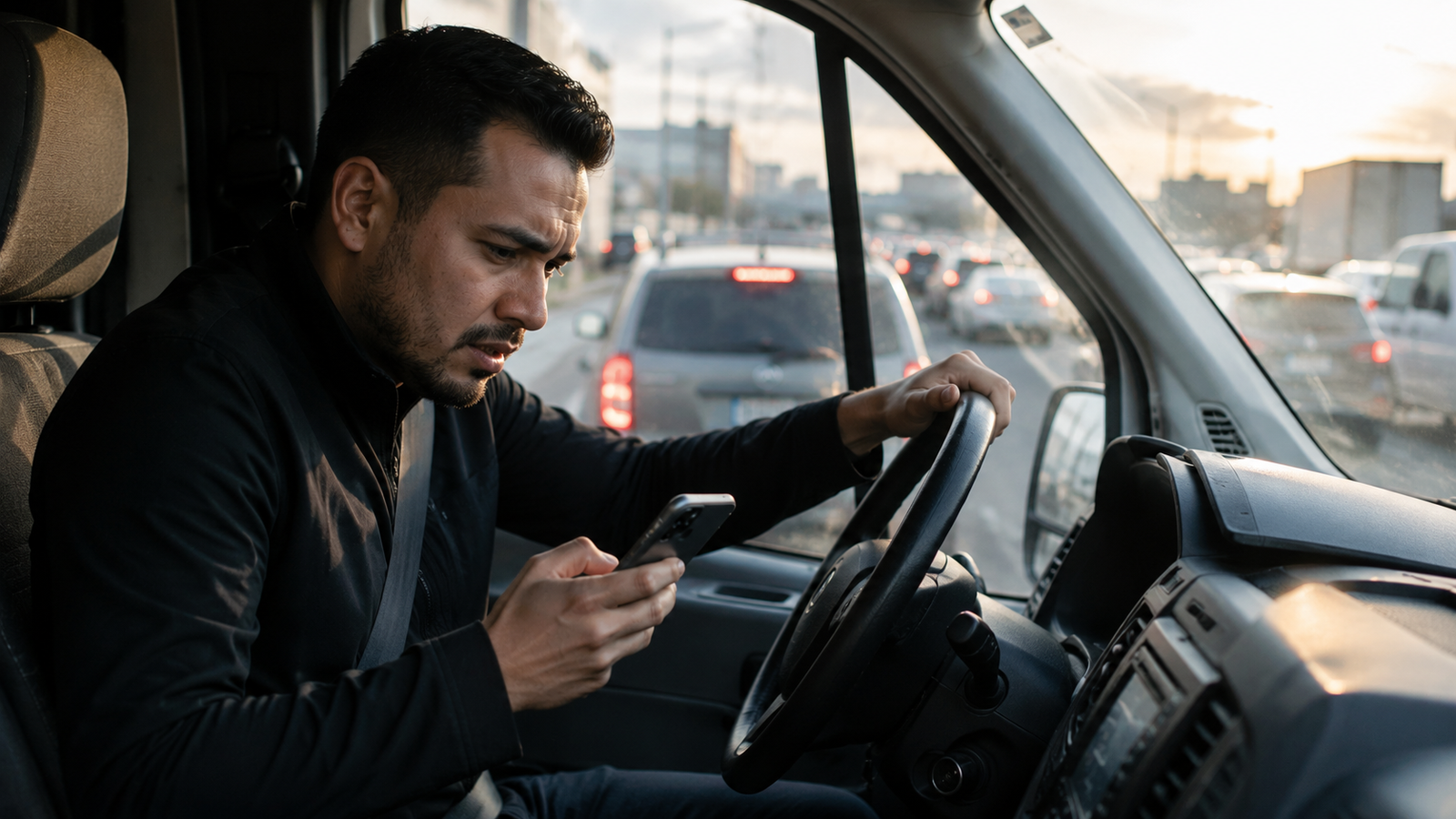
Three weeks before the collision, the telematics showed hard braking on the same stretch every Tuesday. Nobody followed up. The driver felt too rushed to take the extra thirty seconds. The data was there — it just wasn't being read.

Hard braking events ignored
Speeding pattern unaddressed
Pressure to finish on time
No early coaching conversation

Every accident a DSP experiences was preceded by warning signs that went unaddressed. Hard braking that nobody followed up on. A speeding pattern that showed up in the data three weeks before the collision. A driver who felt too rushed to take the extra thirty seconds a safe reverse required. Accidents don't come out of nowhere — they come out of habits, pressure, and gaps in attention that build up quietly until something gives.

The most effective safety programs don't wait for incidents to react. They build a system of early intervention that treats near-misses and telematics flags as the valuable warnings they are, rather than minor infractions to log and forget. The difference between a DSP with a strong safety record and one that's constantly reacting to incidents is almost always found in what happens before anything goes wrong.

7 min read Last Mile Insights Safety

The pre-trip inspection in that photo isn't a formality — it's the first line of defense against a breakdown, a missed route, and a scorecard hit that didn't have to happen. A driver who checks the tires, tests the lights, and walks the van before pulling out is a driver whose problems stay small. The ones who skip it find out why it mattered somewhere between stop 40 and stop 41, alone on a residential street with a flat and a full van.

But the inspection is only one layer. Preventing accidents at scale — across a whole fleet, every day — requires something deeper than a checklist. It requires a system that spots dangerous patterns before they become incidents, removes the pressure that causes risky behavior, and builds a culture where safe driving is the standard rather than the reminder. That system starts with the data you're already collecting and probably underusing.

Telematics as Your Early Warning System

The Data Is Already Telling You What's About to Go Wrong

Most DSPs have telematics running in every van. Most of them are using it to confirm what already happened — reviewing events after the fact, logging violations, and occasionally mentioning it to a driver who already moved on. That's not a safety program; it's an audit trail. The shift that changes everything is using the same data proactively: catching patterns before they become incidents, and coaching before the cost becomes real.

Warning Signal 01
Hard Braking Events

A single hard brake could be a pedestrian, a pothole, or an unavoidable hazard. Three hard brakes on the same street over two weeks is a driver who is consistently arriving at that point too fast — and it's a collision waiting to happen if the habit isn't addressed.

"You've had three hard-braking events on Oak Street this week. What's happening there — is there a sight line issue, or is timing tight on that stretch?"

Warning Signal 02
Speeding Patterns

Occasional speed events in traffic happen. A driver who is consistently over the limit on residential streets is telling you something about how they feel about time pressure — and that feeling is exactly what turns a near-miss into a child on a stretcher.

"Your data shows speeding on the south side routes most afternoons. Are routes running tight there? Let's look at whether the stop count is realistic."

Warning Signal 03
Harsh Cornering

Harsh cornering is often the first sign that a driver is rushing through familiar streets — taking turns they know at speeds that work until they don't. It's also a strong predictor of rollover risk in fully loaded vans, where the center of gravity is higher than most drivers realize.

"You've had several cornering events near the depot exit. That's a high-pedestrian area — let's slow that stretch down by about 10 seconds."

Warning Signal 04
Seatbelt Non-Compliance

A driver not wearing a seatbelt isn't just a safety risk — it's a signal about their broader mindset. The driver who skips the belt is usually the same one skipping the walk-around, the same one not reading the delivery notes. It's a window into habit, not just one behavior.

"The system flagged three seatbelt events this week. I know it seems minor but it tells me something about how rushed you're feeling — what's going on?"

The coaching language matters as much as the coaching itself. Every example above is framed as curiosity, not accusation — "what's happening there?" not "you keep doing this." That framing is what determines whether a driver opens up or shuts down. A driver who feels interrogated gets defensive and changes nothing. A driver who feels like a manager is genuinely trying to understand their day will tell you things that the telematics can't.

The goal isn't to catch drivers doing something wrong. It's to spot a developing pattern early enough that a five-minute conversation fixes it — before it costs a collision, a claim, a scorecard hit, and a driver who may never fully recover their confidence on the road. Telematics gives you that window. The question is whether you're using it or just watching it.

Build a simple weekly rhythm: pull the top five events by driver, look for anyone with three or more of the same type, and have a short, specific, curious conversation with them before the end of the week. That's the whole system. It doesn't require a new tool, a policy update, or extra staff — just the habit of actually reading what the data is already telling you, and acting on it while it's still cheap to do so.

Most accidents are preventable. The ones that weren't usually happened because the warning signs were visible and nobody followed up. Build the habit of following up, and the incident that was three weeks away quietly never happens at all.

Pressure as the Root Cause

Most Unsafe Decisions Aren't Reckless — They're Rushed

Take away the telematics data for a moment and look at the driver. The vast majority of safety events aren't caused by bad people with bad habits — they're caused by good people under pressure making small compromises that accumulate. The driver who speeds through a residential street at 3 p.m. isn't reckless by nature; they're behind schedule, they've been behind schedule every day this week, and they've learned — consciously or not — that cutting a few seconds here and there is how you get home. That's a system problem, not a character problem.

Step 01
Route runs tight

Stop count is high, windows are narrow, no buffer for anything unexpected.

Step 02
Driver feels pressure

They start rushing — skipping the walk-around, speeding between stops, cutting corners on the route.

Step 03
Small risks accumulate

Hard braking, harsh cornering, seatbelt skipped. Each one small — together they point at an incident forming.

Step 04
Incident happens

And everyone is surprised — even though the data showed this coming for weeks.

Two Operations, Same Route
High Pressure Operation
Route runs over — driver absorbs the cost

The manager's priority is completion rate. Late routes get flagged. Drivers feel judged on finishing time above everything else — so they adapt by rushing, skipping checks, and taking risks that don't show up until something breaks.

Driver speeds to make up time on every route
Walk-around skipped to leave earlier
Near-misses not reported — driver fears blame
Safety events logged but never discussed
Low Pressure Operation
Route runs over — operation absorbs it

The manager makes it clear: a slightly late route is acceptable, a collision is not. Drivers don't feel the need to rush because the culture protects them from the pressure that causes unsafe decisions. Safety events get discussed, not punished.

Driver drives at a safe, sustainable pace
Walk-around happens every morning without exception
Near-misses reported and discussed calmly
Safety events used as coaching, not discipline

The fix for pressure isn't telling drivers to slow down — it's removing the conditions that make them feel like they can't. That means reviewing stop counts on routes that consistently run long, making it explicitly clear that a late route is preferable to a speeding event, and responding to near-misses with curiosity rather than frustration. When drivers believe the operation has their back, they make safer decisions — not because they were told to, but because they don't feel the need to cut corners anymore.

This is the lever most DSP owners overlook entirely. They focus on coaching individuals while the system keeps generating the pressure that makes unsafe behavior rational. Address the pressure and the individual coaching gets dramatically easier — because you're no longer fighting the environment every time you ask a driver to slow down.

A simple diagnostic: ask your drivers, privately and directly, whether they feel like they can finish their routes safely without rushing. The answer tells you more about your safety culture than any telematics report. If the honest answer is no — if drivers feel like finishing on time requires taking risks — that's the root cause, and no coaching program fixes it until the pressure itself is addressed.

The operations with the best safety records aren't the ones with the strictest rules. They're the ones where drivers don't feel like the clock is their enemy — where safe and timely are the same goal, not competing ones.

Recognition and the Safety Culture

Safe Driving Needs to Be Seen, Not Just Expected

Most safety programs are built entirely around the negative — the incidents, the violations, the things that went wrong. A program built only on correction teaches drivers one lesson: stay off the radar. Recognition flips that. It tells your team that safe, careful driving is seen and valued, not just expected in silence — and that shift in signal changes behavior more reliably than any policy update ever will.

The mechanics of recognition are simple. A driver who goes a week, a month, or a quarter without a safety event deserves acknowledgment — public, specific, and genuine. Not a generic "good job" but "Marcus went 30 days without a single event on one of our busiest routes — that's exactly the standard we're building toward." That kind of specific recognition does three things at once: it rewards the driver, it signals to everyone else what gets noticed, and it defines the culture you're building — one morning huddle at a time.

Recognition also changes how drivers relate to the data. In a correction-only environment, telematics feels like surveillance — something used to catch you. In a recognition environment, it becomes a scorecard worth improving. Drivers start caring about their numbers in the same way they'd care about any metric that gets them acknowledged in front of their peers. The data doesn't change; the relationship to it does.

And the cost is essentially zero. A thirty-second mention in the morning stand-up, a personal word from a manager, a simple streak tracker on the wall — these are the cheapest retention and safety tools in the business. The operations that skip them aren't saving time; they're leaving the most powerful motivational tool in last-mile delivery completely unused.

Recognition Moment 01
The clean-week callout

"No events this week for anyone on the north routes — that's five drivers running clean. That's what this operation looks like when things are right."

Recognition Moment 02
The streak milestone

"Diana hit 60 days without a safety event today. On a route that runs heavy every afternoon. That doesn't happen by accident — thank you."

Recognition Moment 03
The near-miss handled right

"James flagged a near-miss yesterday instead of ignoring it. That's exactly what we want — reporting it is what lets us fix it. Good call."

Recognition Moment 04
The new driver milestone

"First 30 days clean for our three newest drivers. That starts with how they were trained — and it tells us the standard is being set right from day one."

What Recognition Actually Costs
Per driver, per year
30sec
Morning stand-up mention

The time it takes to name a driver and what they did well in front of the team.

0$
Cost of verbal recognition

A specific, genuine acknowledgment costs nothing and often means more than a bonus.

x
Return on attention

Drivers who feel seen perform better, stay longer, and set the standard for everyone around them.

The operations with the strongest safety cultures aren't the ones with the most sophisticated systems or the strictest policies. They're the ones where drivers genuinely believe that safe driving matters to the people they work for — not just because it avoids consequences, but because it's valued. That belief doesn't come from a rulebook. It comes from what gets named and praised in front of the team, morning after morning, until it becomes the standard everyone holds themselves to.

Start small if you need to. Add one recognition moment to your stand-up every day for two weeks — just one driver, one specific thing, thirty seconds. Watch what happens to the room. Watch what happens to the data. The shift is faster than most managers expect, and it costs nothing to find out.

Recognition and correction aren't opposites — they're partners. Correction without recognition creates fear. Recognition without correction creates complacency. The balance is what builds a culture where drivers care about safety because they feel it matters to the operation, not just because they're afraid of what happens if they slip. Get that balance right and your safety metrics will follow.

And when they do improve — when streaks get longer, when near-miss reports go up because drivers trust the system, when the telematics data starts trending in the right direction — recognize that too. The culture compounds when the wins get named as readily as the problems.

It Starts at the Top

Drivers Follow What Managers Actually Do

Safety culture doesn't come from a policy document — it comes from the daily signals that managers send about what actually matters. Drivers are remarkably good at reading the gap between what's said and what's valued. If a manager talks about safety but pressures drivers to finish on time above everything else, the team hears the real message loud and clear: completion is what counts, safety is what you say. Closing that gap is the most important thing a DSP owner or manager can do for their safety record.

Leadership Signal 01
Safety leads the stand-up

When safety is the first thing on the morning agenda — not an afterthought squeezed in at the end — it signals to every driver that it's the first priority of the day. The order of the stand-up tells the team what ranks above what. Put safety first and it stays first in the cab too.

Leadership Signal 02
Time is protected, not pressured

A manager who never pushes a driver to skip a check, rush a route, or cut a corner to save time sends a powerful signal: safety isn't negotiable, even when it costs minutes. That signal travels fast. Once drivers trust that the operation won't punish them for being safe, the behavior changes without anyone being told.

Leadership Signal 03
Near-misses get curiosity, not blame

How a manager responds to the first near-miss report defines whether drivers ever report another one. React with frustration or blame and the reporting stops — and you lose your best early warning system. Respond with "what happened, and what can we change?" and the reports keep coming, which means the problems get fixed before they become incidents.

Leadership Signal 04
Safety data reviewed weekly — out loud

When managers review telematics data every week and talk about it openly — in coaching conversations, in stand-ups, in one-on-ones — it signals that the data matters and someone is actually paying attention. Safety metrics that are collected but never discussed quietly teach the team that they don't really count.

Situation What Sends the Wrong Signal What Sends the Right One
Route runs late "Why aren't you finished?"
Teaches drivers to rush rather than be safe.
"What slowed you down — was the route tight?"
Opens a conversation about the system, not the driver.
Near-miss reported "How did that happen?"
Sounds like blame — stops future reporting.
"Good that you flagged it — what can we change?"
Rewards reporting and fixes the problem.
Safety event flagged "You need to be more careful."
Vague, dismissive, changes nothing.
"Three hard brakes on Oak St — what's happening there?"
Specific, curious, and leads to a real fix.
Clean week Nothing said — assumed and expected.
Good behavior invisible, bad behavior visible.
"Everyone clean this week — that's the standard."
Names the behavior you want more of.

None of these signals require a new system, a training program, or extra budget. They require a consistent decision, made every day, about how to respond to the situations that the operation naturally produces. A manager who responds to a near-miss with curiosity instead of frustration, who reviews the data out loud every week, and who never pressures a driver to rush is building a safety culture whether they're thinking about it in those terms or not.

And the reverse is also true. A manager who focuses only on completion, who reacts to late routes with frustration, and who treats telematics events as ammunition rather than information is actively dismantling safety culture — again, whether they intend to or not. Culture is built by behavior, not intention. What managers do every day is what the operation becomes.

The most effective thing a DSP owner can do for their safety record isn't buying better telematics or writing a stronger policy — it's deciding how they're going to respond the next time a route runs late, a near-miss gets reported, or a safety event shows up in the data. Those responses, repeated consistently over weeks and months, are what build the culture that keeps drivers safe when no one is watching.

Start there. Everything else follows.

The Bottom Line

Accidents Don't Come Out of Nowhere — They Come Out of Systems

Every incident that happens in a DSP was shaped by decisions made long before the moment of impact — about how tightly routes were loaded, whether telematics flags got followed up on, how a manager responded the last time a driver reported a near-miss. The accident itself is just the moment the system's weaknesses finally ran out of luck. Build the system right, and that moment never comes.

The four layers in this article aren't independent programs — they work as a single system. Telematics catches the early signals. Removing pressure removes the conditions that generate them. Recognition builds the culture that makes safe behavior the default. And leadership sets the tone that determines whether any of it actually sticks. Skip one and the others get harder. Build all four and something shifts — not just in the data, but in the way the operation feels from the inside.

Use telematics early

Patterns in the data are warnings. Act on them before they become incidents.

Remove the pressure

Safe and timely should be the same goal — not competing ones that drivers have to choose between.

Recognize the good

Name safe driving out loud. What gets recognized gets repeated.

Lead from the top

Culture is built by what managers do every day — not what the policy says.

The good news is that none of this requires a budget, a new vendor, or a major overhaul. It requires the discipline to pull the telematics data every week, the clarity to tell drivers that safe is more important than fast, the habit of naming good driving out loud, and the self-awareness to notice what signals you're sending when things go wrong. Those four things, done consistently, are what the operations with the best safety records are actually doing — and they're available to any DSP owner who decides to start today.